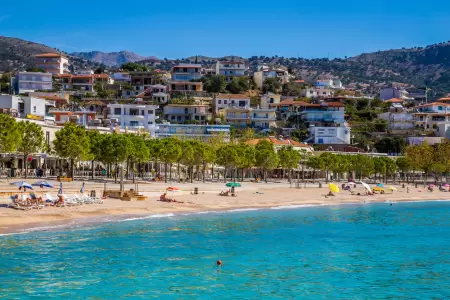
Best time to go

When and where to go to Corfu?

Find the best time to travel to Corfu using month-by-month climate and weather. Also compare visitor numbers, the cities to visit and activities to do on site. Also find the best time to visit Corfu at the lowest possible cost using the month-by-month price index.

Custom search

Find when and where to go to Corfu

The best times and places to travel to Corfu according to your preferences.
When would you like to depart?
What matters most?
When and where to go to Corfu?

Page summary

Corfu: best time to go — summary
Best time to go

Best time to go to Corfu

Our tips and advice for choosing the best time to travel to Corfu.

Julie Parment
By Julie Parment
Travel specialist
Climate

Climate of Corfu

Explore monthly temperatures and rainfall city by city on Corfu, then read our summary on the climate and seasons on Corfu.

Weather charts: temperatures and precipitation on Corfu

Climate averages in Paleokastrítsa

More details
10°C to 29°C 1911 mm/year (max 335 mm/month)

Temperatures

Average curve and range between monthly minima and maxima.
Average Min / max

Precipitation

Average monthly rainfall observed each month.
Average rainfall

About the climate and seasons on Corfu

Cities and places

Top destinations of Corfu

Discover the best time to go and what the climate is like for each city and destination on Corfu.

Loading...
Visitor numbers

Crowd levels and tourist seasons

Compare the busiest periods and the quieter months to plan your trip to Corfu according to the atmosphere you seek.

Peak season
High season
Crowds at a glance

How do visitor numbers change on Corfu?

Visitor numbers on Corfu vary significantly depending on the time of year. The choice of month can therefore really change the atmosphere of the trip: livelier in high season, more relaxed and quieter in low season.

The high season is concentrated mainly in July and August, with more visitors, a livelier atmosphere and often increased demand for accommodations.

To travel with fewer crowds, the months of January, February, March, April, May, June, September, October, November and December are generally the most interesting in terms of crowds.

Updated on 15/09/2026

Visitor index month by month

An index from 0 to 100 to visualize how visitor numbers vary over the year.
The information and the chart above are an average of visitor numbers on Corfu. The low and high season dates may therefore vary depending on regions, cities, climate, or certain local events.
Seasonal budget

Travel prices: best time to go cheaper?

Compare the cheapest months and more expensive periods to schedule your trip to Corfu at the best time for your budget.

Best prices
Moderate prices
More expensive month
Price peaks
Prices at a glance

When are prices most attractive on Corfu?

Prices vary significantly depending on the month on Corfu. The choice of timing can therefore make a real difference to the budget, especially if the trip combines flight, accommodation and rental car.

To aim for the lowest prices, the months of March, April, May, June, September, October and November generally stand out as the most attractive.

Conversely, the months of January, July and August are often more expensive: it's better to book earlier or compare more options.

Updated on 12/09/2026

Price index month by month

An index from 0 to 100 for visualizing price variations throughout the year. It is calculated from the average prices of accommodations and car rentals.
Average score
44/100
The information and the chart above are an average of prices observed on Corfu for accommodations (2- to 4-star hotels) and car rentals (all categories combined). Actual rates may vary by city, region, exact dates, availability and time of booking.
Frequently asked questions

Best time to go to Corfu: Frequently asked questions

Short answers to the questions we most often ask ourselves before booking.

The best weather conditions on Corfu are concentrated over 7 months: April, May, June, July, August, September and October. It is during this period that the weather is considered good to ideal.

Regarding weather, the least favorable months on Corfu are the following: January, February, March, November and December. Travel remains possible, but expect less pleasant conditions and a more flexible itinerary.

Precipitation is concentrated mainly in these months: January and November. The peak occurs in November, with about 335 mm of precipitation spread over approximately 11 wet days. Conversely, the driest month is August, with about 18 mm.

The hottest month on Corfu is August, with an average of 29°C during the day and 26°C at night. The coolest is January, with 13°C during the day and 9°C at night.

Swimming is most pleasant when the water temperature exceeds 23°C, that is during these months: July, August and September. The peak is reached in August, with about 26°C on average.

Visitor levels are significantly higher during these months: July and August. For a quieter trip, aim for January, February, March, April, May, June, September, October, November and December. Over the year, the average visitor index is 39/100.

The best rates on Corfu are found in these months: March, April, May, June, September, October and November, for flights, accommodation and car hire combined. Conversely, the most expensive periods are January, July and August.

We detail the month-by-month weather for 10 cities on Corfu, including Paleokastrítsa, Kavos and Sidari. Compare them before finalizing your itinerary: conditions can vary significantly from one area to another.
Nearby

Best time to go near Corfu?

Extend your trip or your search for the ideal destination by discovering the month-by-month climate of destinations near Corfu.

Prepare your trip to Corfu

Find other useful information to prepare your trip.

Places to visit on Corfu Places to visit on Corfu Our selection of places to visit, their interactive map and a tailor-made itinerary to create, then download or print.
Money and currency on Corfu Money and currency on Corfu Discover the currency, the exchange rate of the day, images of banknotes and coins and all our advice on money while traveling.
Top
Switch to imperial units?

Temperatures are shown in degrees Celsius and precipitation in millimetres. Based on your country of connection, °F and inches may be more familiar to you.