Best time to go

When is the best time to visit Matara?

Find the best time to travel to Matara, Sri Lanka, with month-by-month weather, temperatures and precipitation. Also compare the local tourist crowds and the activities to do on-site.

Custom search

Find your best time to Matara

Check your ideal travel criteria and find the best time to go to Matara according to your preferences.
What matters most?
When is the best time to visit Matara?

Page summary

Matara : best time to go in brief
Best time to go

Best time to go to Matara

Our tips and advice for choosing the best time to travel to Matara.

Climate

Climate of Matara, Sri Lanka

Temperatures, rain, sunshine and humidity allow you to quickly read the climate month by month in Matara.

Climate charts in Matara

Temperatures

Average curve and range between monthly minima and maxima.
Average Min / max

Precipitation

Average monthly rainfall observed each month.
Average rainfall Days with significant precipitation (>5 mm) Days with precipitation

Average daily sunshine

Average sunshine hours per day by month.
Sunshine hours

Relative humidity

Average humidity observed over the months.
Average humidity

What is the climate type in Matara?

Matara has a equatorial climate, which is a type of tropical climate. More precisely, according to the Köppen-Geiger classification, it is an equatorial (or tropical rainforest) climate (Af).

Activities

What to do in Matara and the best time to go depending on your interests?

Identify the best times for each travel desire in Matara and the activities you wish to do there.

Activity calendar

Each dot indicates, month by month, whether conditions are more or less favorable in Matara.

Very favorable Potentially favorable Unfavourable
Activity Jan. Feb. Mar. Apr. May Jun. Jul. Aug. Sep. Oct. Nov. Dec.
Beach and swimming Very favorable Very favorable Very favorable Very favorable Potentially favorable Potentially favorable Potentially favorable Potentially favorable Potentially favorable Potentially favorable Very favorable Very favorable
Cultural visits and heritage Very favorable Very favorable Very favorable Very favorable Potentially favorable Potentially favorable Potentially favorable Potentially favorable Potentially favorable Potentially favorable Very favorable Very favorable
Animal observation Very favorable Very favorable Very favorable Very favorable Potentially favorable Potentially favorable Potentially favorable Potentially favorable Potentially favorable Potentially favorable Very favorable Very favorable
Diving and snorkeling Very favorable Very favorable Very favorable Very favorable Potentially favorable Potentially favorable Potentially favorable Potentially favorable Potentially favorable Potentially favorable Very favorable Very favorable
Watersports Very favorable Very favorable Very favorable Very favorable Potentially favorable Potentially favorable Potentially favorable Potentially favorable Potentially favorable Potentially favorable Very favorable Very favorable
Nature and landscapes Very favorable Very favorable Very favorable Very favorable Potentially favorable Potentially favorable Potentially favorable Potentially favorable Potentially favorable Potentially favorable Very favorable Very favorable
Gastronomy Very favorable Very favorable Very favorable Very favorable Very favorable Very favorable Very favorable Very favorable Very favorable Very favorable Very favorable Very favorable
Well-being Very favorable Very favorable Very favorable Very favorable Potentially favorable Potentially favorable Potentially favorable Potentially favorable Potentially favorable Potentially favorable Very favorable Very favorable
Boat trip and cruise Very favorable Very favorable Very favorable Very favorable Potentially favorable Potentially favorable Potentially favorable Potentially favorable Potentially favorable Potentially favorable Very favorable Very favorable
Visitor numbers

Crowd levels and tourist seasons

Compare the busiest periods and the quieter months to plan your trip to Matara according to the atmosphere you seek.

Peak crowds
High season
Quieter period
Crowds at a glance

How do visitor numbers change in Matara?

Visitor numbers in Matara vary significantly depending on the time of year. The choice of month can therefore really change the atmosphere of the trip: livelier in high season, more relaxed and quieter in low season.

The high season is concentrated mainly in January, February, March and December, with more visitors, a livelier atmosphere and often increased demand for accommodations.

To travel with fewer crowds, the months of April, May, June, July, August, September, October and November are generally the most interesting in terms of crowds.

Updated on 15/09/2026

Visitor index month by month

An index from 0 to 100 to visualize how visitor numbers vary over the year.
Average score
48/100
Nearby

Destinations near Matara

Compare cities and destinations near Matara to find an alternative travel time, plan the rest of your stay, or spot an alternative destination.

Loading...
Frequently asked questions

Best time to go to Matara: Frequently asked questions

Short answers to the questions we most often ask ourselves before booking.

The climate is favorable year-round in Matara: all twelve months show good conditions. If you must decide, these months stand out as the best choices: February, March, April and May.

No month is really to be avoided in Matara: conditions remain fair to favorable throughout the year. The choice should be made based on prices, crowd levels or your preferred activities on site.

Precipitation is concentrated mainly in these months: May, September, October and November. The peak occurs in November, with about 170 mm of precipitation spread over approximately 12 wet days. Conversely, the driest month is January, with about 73 mm.

Temperatures vary little over the year in Matara: expect on average 31°C during the day and 27°C at night, with March as the warmest month and August as the coolest month.

Swimming is most pleasant when the water temperature exceeds 29°C, that is during these months: March, April, May and November. The peak is reached in April, with about 30°C on average.

The sun is at its most generous in June, with about 12.0 hours of sunshine per day. The darkest month is December, with 8.7 hours per day.

Visitor levels are significantly higher during these months: January, February, March and December. For a quieter trip, aim for April, May, June, July, August, September, October and November. Over the year, the average visitor index is 48/100.
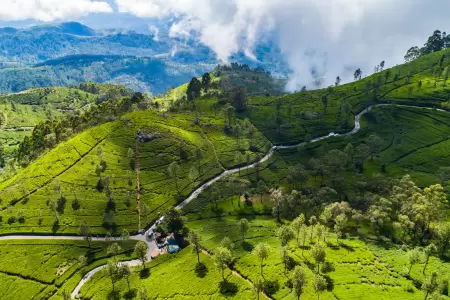
We detail the month-by-month weather of 12 nearby destinations, including Mirissa, Weligama and Unakuruwa Beach. Compare them to build a coherent itinerary: conditions can vary from one city to another, even over short distances.
Top